
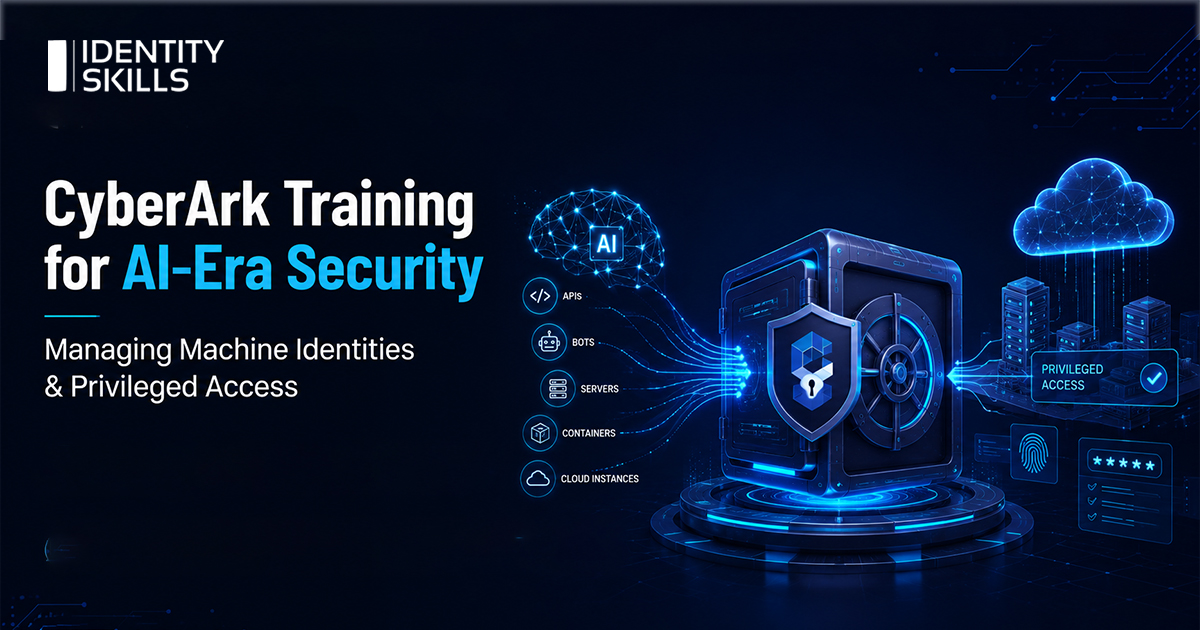
Cybersecurity is changing really fast. A few years ago, most organizations were mainly focused on protecting human users and their accounts. But now, with the rapid growth of AI, automation, cloud services, and DevOps, there’s a new challenge security teams are dealing with every day, machine identities.
Today, machine identities often outnumber human identities in many organizations. Applications, APIs, containers, service accounts, and AI-driven systems all need credentials to communicate and access resources securely. If these identities are not managed properly, they can become an easy target for attackers.
This is one of the reasons why CyberArk training has become so important in recent years. As companies invest more in identity security, professionals with CyberArk skills are seeing increased demand across different industries.
What Are Machine Identities?
Machine identities are digital identities used by non-human entities. Unlike employee accounts, these identities belong to systems, applications, services, or automated processes.
Some common examples include:
- Applications connecting to databases
- APIs communicating with cloud services
- Containers running workloads
- Service accounts used for automation
- Certificates and cryptographic keys
- AI agents performing automated tasks
The number of these identities keeps growing as organizations adopt cloud-native technologies and AI-powered solutions. In many cases, security teams don’t even have complete visibility into how many machine identities exist within their environment.
That’s where problems usually start.
Why Machine Identity Security Matters More Than Ever
Every machine identity has access privileges. If attackers gain access to those credentials, they can move through systems, access sensitive data, and sometimes even take control of critical infrastructure.
The rise of AI has made this challenge even bigger. AI systems constantly interact with applications, databases, APIs, and cloud services. Each interaction requires authentication, which means more credentials and more identities to manage.
Without proper controls, organizations may face the following:
- Unauthorized access to sensitive resources
- Data breaches
- Privilege escalation attacks
- Cloud security incidents
- Compliance issues
- Operational disruptions
Because machine identities work behind the scenes, they can easily be overlooked. Unfortunately, attackers know this very well.
CyberArk’s Role in Modern Identity Security
Most people know CyberArk for Privileged Access Management (PAM), but today its capabilities go much further than traditional password vaulting.
CyberArk helps organizations secure both human and machine identities across hybrid and cloud environments. It provides tools to manage privileged credentials, secure secrets, protect certificates, and enforce least-privilege access.
Some of the key areas where CyberArk helps include:
- Privileged Access Management
- Secrets Management
- Machine Identity Security
- Session Monitoring
- Credential Rotation
- Cloud Privilege Management
- Identity Security for Zero Trust initiatives
As identity becomes the new security perimeter, CyberArk continues to play an important role in helping organizations reduce risk.
Why CyberArk Training Is Becoming Essential
The cybersecurity industry is facing a skills gap, especially in identity and access management. Organizations are actively searching for professionals who understand how to secure privileged accounts and machine identities.
CyberArk training helps bridge that gap by providing practical knowledge that can be applied in real-world environments.
A good CyberArk training program usually covers the following:
Privileged Access Management Fundamentals
Learners understand how privileged accounts are secured, monitored, and managed using CyberArk solutions.
Secrets Management
Training introduces techniques for protecting credentials used by applications, scripts, and DevOps pipelines.
Machine Identity Protection
Professionals learn how certificates, keys, and non-human identities can be managed more effectively.
Cloud Security Integration
Modern CyberArk training also covers security practices for cloud and hybrid environments.
Identity Security Best Practices
Students gain a better understanding of how organizations implement least-privilege access and Zero Trust security models.
Skills You Can Gain Through CyberArk Training
One reason many professionals choose CyberArk training is because it focuses heavily on practical skills rather than only theory.
Some valuable skills include:
- CyberArk administration
- PAM implementation
- Credential management
- Secrets management
- Session monitoring
- Compliance support
- Machine identity management
- Cloud privilege security
- Risk assessment and mitigation
These skills are useful across banking, healthcare, government, manufacturing, and technology sectors.
Career Opportunities After CyberArk Training
As identity security continues to grow, so does the demand for CyberArk professionals.
After completing CyberArk training, learners may pursue roles such as the following:
- CyberArk Administrator
- PAM Engineer
- Identity and Access Management Specialist
- Security Engineer
- Cloud Security Engineer
- Cybersecurity Analyst
- DevSecOps Engineer
- Identity Security Consultant
Many organizations are prioritizing identity security projects, which means CyberArk expertise is becoming a valuable addition to a cybersecurity resume.
CyberArk and Zero Trust Security
Zero Trust has become one of the most discussed security frameworks in recent years. The idea is simple: never trust, always verify.
CyberArk supports this approach by helping organizations control and monitor privileged access across users, applications, and machines.
With CyberArk, organizations can:
- Enforce least-privilege access
- Continuously verify identities
- Protect sensitive credentials
- Monitor privileged sessions
- Reduce insider and external threats
Understanding how these capabilities work is another reason many professionals choose to invest in CyberArk training.
Preparing for the Future of AI-Era Security
The future of cybersecurity isn’t only about protecting users anymore. Organizations now have to secure thousands, sometimes millions, of machine identities operating across complex environments.
AI adoption is accelerating this trend. As more automated systems and intelligent applications are deployed, the need for strong identity security will only increase.
Professionals who understand privileged access management, machine identity security, and identity governance will likely remain in high demand for years to come.
CyberArk training offers a practical way to develop those skills and stay aligned with the changing needs of the cybersecurity industry.
Conclusion
The AI era has changed how organizations think about security. Machine identities have become a critical part of daily operations, and protecting them is no longer optional.
CyberArk training helps professionals understand how to manage privileged access, secure machine identities, and support modern identity security strategies. Whether you’re starting your cybersecurity journey or looking to expand your existing skills, learning CyberArk can be a smart step toward building a future-ready career.
As organizations continue investing in AI, cloud technologies, and Zero Trust architectures, the demand for CyberArk expertise is expected to keep growing. That’s what makes CyberArk training not just relevant today, but also valuable for the years ahead.